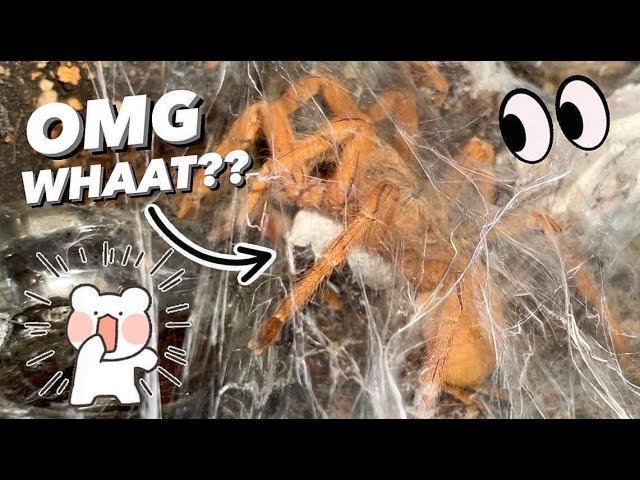
Have you ever experienced the shock of finding out that your 9-year-old TARANTULA has laid a phantom egg? Dive into this bizarre yet fascinating discovery as we unravel the mystery together!
Introduction
If you’ve found yourself in the peculiar situation of owning a tarantula, you know they can surprise you in numerous ways. From their eight furry legs to the way they meticulously spin webs, tarantulas have a mystique that captures the hearts of many. But what happens when your 9-year-old tarantula suddenly lays a phantom egg? Is this even possible? Let’s dive into this unexpected scenario together, and unravel the mystery behind this rare occurrence.
Unveiling the Phantom Egg Mystery
Picture this: You’re admiring your tarantula in its terrarium, when you notice something peculiar – a phantom egg! Your first reaction might be disbelief, confusion, or even excitement. So, what exactly is a phantom egg, and how does it come to be? Let’s break it down:
Understanding Phantom Eggs
- Phantom eggs are mysterious occurrences where a female tarantula lays an egg sac without any actual fertilization taking place.
- In scientific terms, this phenomenon is referred to as parthenogenesis, a process where an egg develops without male fertilization.
- While rare, parthenogenesis isn’t unheard of in the animal kingdom, with some insects and reptiles also capable of this reproductive feat.
Delving into the Intricacies
- The biological mechanism behind phantom eggs in tarantulas remains a subject of scientific intrigue.
- Factors such as environmental conditions, hormonal changes, or even genetic predispositions might contribute to triggering parthenogenesis in tarantulas.
- Though seemingly perplexing, this phenomenon highlights the incredible adaptability and resilience of these fascinating creatures.
Observing Behavioral Changes
- Female tarantulas may exhibit unique behaviors before, during, and after laying a phantom egg, such as increased web spinning or nesting activities.
- It’s crucial to monitor your tarantula closely during this period to ensure her health and well-being are prioritized.
Conclusion
In the realm of tarantula keeping, encountering a phantom egg scenario with your 9-year-old arachnid can be a riveting experience. Embrace the wonder and mystery of nature’s intricacies, all while providing the best care for your beloved eight-legged companion.
FAQs regarding Phantom Eggs in Tarantulas
-
Can a male tarantula lay a phantom egg?
- No, only female tarantulas can lay phantom eggs as part of the parthenogenesis process.
-
Will my tarantula be able to hatch the phantom egg on her own?
- Since phantom eggs are unfertilized, they won’t hatch into viable offspring.
-
Should I remove the phantom egg sac from my tarantula’s terrarium?
- It’s advisable to remove the phantom egg sac to prevent any potential complications or stress to your tarantula.
-
Is there a likelihood of my tarantula laying more phantom eggs in the future?
- While rare, tarantulas that have laid phantom eggs once might exhibit similar behavior in the future under specific conditions.
-
How can I support my tarantula through the process of laying a phantom egg?
- Providing a stress-free environment, adequate moisture, and a balanced diet can contribute to your tarantula’s well-being during this unique reproductive event?